A stronger center
Pilates builds what Joseph called the powerhouse: your abdominals, back, glutes, and pelvic floor working together. That deep strength sits underneath everything you do, from lifting groceries to swinging a golf club.
Why Pilates
People ask me what Pilates actually is all the time, usually right before they ask if it is like yoga. Fair question. This page is the answer I wish someone had given me: plain English, no jargon, no sales talk. Read it once and you will be able to explain Pilates to the next person who asks.
The Short Version
About a hundred years ago, a man named Joseph Pilates built an exercise method and called it Contrology. The name gives the whole thing away: control.
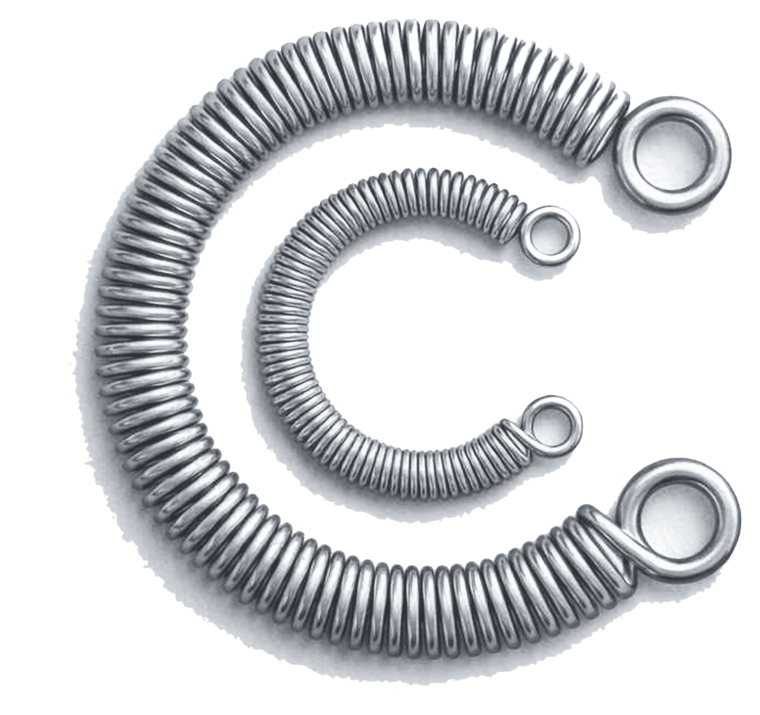
Pilates is full body exercise done with total control. The movements are precise, the pace is deliberate, and your breath runs the show. You work on a mat, or on spring loaded equipment that supports you in one exercise and challenges you in the next.
There is no momentum to hide behind and no bouncing through reps. Small movements, done exactly right, that add up to a body that works better at everything else.
The one sentence version: Pilates trains your deep core and your control, so every other movement you make gets stronger, steadier, and easier.
The History
Pilates was not invented in a gym. Joseph Pilates spent fifty years building it, and the most famous equipment in the method started as bedsprings on an iron bed in a First World War internment camp.
Joseph was born in Germany in 1883, a sickly kid who decided early that he was not going to stay that way. He studied every kind of exercise he could get his hands on, built himself into a gymnast and a boxer, and in 1912 moved to England, where he performed in a circus and taught self-defense to Scotland Yard detectives.
When the war broke out, Joseph was interned as an enemy alien, first at Lancaster and then at Knockaloe camp on the Isle of Man. He spent those years teaching his fellow prisoners his exercises, and he worked in the camp hospital, where his job was getting men who had been wounded back on their feet.
For the men who could not get out of bed at all, he went to work on the beds themselves. He took the springs off the bed frames and rigged them so a man lying flat could push and pull against them, working arms and legs that would otherwise have wasted away in the mattress. That rig is the seed of the whole apparatus. The Cadillac in my studio, with its bars and springs, grew out of a hospital bed that one prisoner would not leave useless.
Teachers of the method still tell the story that when the flu pandemic of 1918 swept through the camps, the men who had been training with Joseph came through it remarkably well. Told and retold, it may have grown in the telling. What is not in doubt is what he believed: movement was not a luxury. It was how a body held together.
After the war he went home to Germany, and then he left for good. In 1926 he sailed to America. On the ship he met Clara, who would become his wife and his partner in the work. In New York they opened a studio on Eighth Avenue, in a building full of dance companies, and the dancers found him first: choreographers like Martha Graham and George Balanchine sent him their injured dancers, and the dancers stayed for the strength.
He called the method Contrology and wrote it down in his book, Return to Life. He taught in that studio for forty years. He died in 1967. The method did not, because by then his students were teaching it, and their students after them, body to body and studio to studio, all the way to San Diego.
Every spring loaded machine in a modern studio descends from that camp bed, and from one stubborn idea: a body that moves on purpose holds together.
The Effects
Pilates builds what Joseph called the powerhouse: your abdominals, back, glutes, and pelvic floor working together. That deep strength sits underneath everything you do, from lifting groceries to swinging a golf club.
The work trains the muscles that hold you upright and lines your head, ribs, and pelvis back up the way they were built to stack. Standing tall stops being something you have to remember.
Most exercise picks one. Pilates trains muscles to be long and strong together, and takes your joints through their full, honest range of motion.
Control is a skill, and it is trainable. Precise movement, practiced on purpose, teaches your body where it is in space and how to catch itself.
Full, deliberate breathing is built into every exercise. It steadies the hard reps, powers the deep core work, and leaves you clearer headed than you came in.
Spring resistance is adjustable and every repetition is controlled, so the load can be scaled exactly to the person in front of me. That precision is why the method is so often used alongside rehabilitation work, and why it suits someone rebuilding strength just as well as an athlete looking for an edge.
The Foundations
Teachers sum the method up in six principles. Here they are in plain words:
Air in, air out, on purpose. Breath is the engine.
You think about the movement while you do it. That focus is half the workout.
Everything starts from the middle of you, the powerhouse.
No throwing, no flailing. You own every inch of the movement.
Close enough is not the goal. Exactly right is, and your body can tell the difference.
The exercises connect, one into the next, like a body that knows where it is going.
The Tools
A sliding carriage, springs, and straps. The workhorse of the method, and honest about what your body is doing.
A table with bars and springs that can support you completely or challenge you completely, sometimes in the same exercise.
A small box with a spring loaded pedal. Strength and balance in a tiny footprint.
Just you and the floor. The original version of the method, and nowhere to hide.
The Invitation
Beginners who want to start correctly instead of guessing. Athletes who want the edge that control gives. People who sit all day and can feel it. Older adults who want balance and confidence on their feet. Anyone who has bounced off a gym and sworn the whole idea off.
If you have a body, you qualify. That was Joseph’s whole point: this method was built for every body, at every starting point.
The Teaching
Two doors, same teacher. You can come to me at my private studio, or I come to you: concierge sessions at homes across San Diego and Southern California, including Del Mar, Rancho Santa Fe, and Encinitas.
Every session is one on one. Every cue is aimed at exactly one person, built around your goals, your body, and whatever kind of day you are having.
I am an engineer as well as a teacher, so I can tell you exactly what the springs are doing and why, in plain numbers if you want them. (I built a calculator for it. It is free, and it is on this site.)
And there is no performance here. No mirrors to pose for, no keeping up with the person next to you, because there is no person next to you. Just good work, at your pace.
Your first session goes like this: we talk first. Then I watch you move a little. Then we make a plan together. That is it. You do not need to be ready before you start. Starting is the whole point.
The Promise
Joseph Pilates is credited with a famous line: in 10 sessions you will feel the difference, in 20 sessions you will see the difference, and in 30 sessions you will have a whole new body.
Here is my version of that promise: I will not guarantee you a new body on a schedule, and I will not guarantee a result at all. What I will guarantee is honest work, careful teaching, and a plan built for the body in front of me, aimed at moving better than the one you walked in with. Most people who do the work feel a real difference sooner than they expect.
The Next Step
New here and not ready to book? Start with the free stuff. The community class and the Saturday Cardifferent walk cost nothing and always will. Come move your bones with me.